
QQ plot is a graphical tool to compare two distributions by plotting their quantiles against each other. Can also create PP (probability-probability) plots.
Usage
QQPlot(
  data,
  val,
  val_trans = NULL,
  type = c("qq", "pp"),
  band = NULL,
  line = list(),
  point = list(),
  fill_name = "Bands",
  band_alpha = 0.5,
  split_by = NULL,
  split_by_sep = "_",
  facet_by = NULL,
  facet_scales = "fixed",
  facet_nrow = NULL,
  facet_ncol = NULL,
  facet_byrow = TRUE,
  theme = "theme_ggforge",
  theme_args = list(),
  palette = "Spectral",
  palcolor = NULL,
  aspect.ratio = NULL,
  legend.position = "right",
  legend.direction = "vertical",
  title = NULL,
  subtitle = NULL,
  xlim = NULL,
  ylim = NULL,
  xlab = NULL,
  ylab = NULL,
  seed = 8525,
  combine = TRUE,
  nrow = NULL,
  ncol = NULL,
  byrow = TRUE,
  axes = NULL,
  axis_titles = NULL,
  guides = NULL,
  design = NULL,
  ...
)
Arguments
- data
A data frame containing the data to plot
- val
A character string of the column name for the values to plot. A numeric column is expected.
- val_trans
A function to transform the values before plotting. Default is NULL, which means no transformation.
- type
A character string to specify the type of plot. Default is "qq", which means QQ plot. Other option is "pp" for PP plot.
- band
A list of arguments to pass to
qqplotr::stat_qq_band()orqqplotr::stat_pp_band(), depending on the value oftype. Default is NULL, which means no band. If an empty list or TRUE is provided, the default arguments will be used. Multiple bands can be added by providing a list of lists.- line
A list of arguments to pass to
qqplotr::stat_qq_line()orqqplotr::stat_pp_line(), depending on the value oftype. Default islist(), which means to add a line with default arguments. IfNULLis provided, no line will be added.- point
A list of arguments to pass to
qqplotr::stat_qq_point()orqqplotr::stat_pp_point(), depending on the value oftype. Default islist(), which means to add points with default arguments. IfNULLis provided, no points will be added (not recommended).- fill_name
A character string to name the legend of fill. Default is "Bands".
- band_alpha
A numeric value to set the alpha of all bands. Default is 0.5. It is a shortcut for setting alpha of all bands. You can override it by setting
alphainbandargument.- split_by
Column name(s) to split data into multiple plots
- split_by_sep
Separator when concatenating multiple split_by columns
- facet_by
Column name(s) for faceting the plot
- facet_scales
Scales for facets: "fixed", "free", "free_x", "free_y"
- facet_nrow
Number of rows in facet layout
- facet_ncol
Number of columns in facet layout
- facet_byrow
Fill facets by row (TRUE) or column (FALSE)
- theme
Theme name (string) or theme function
- theme_args
List of arguments passed to theme function
- palette
Color palette name
- palcolor
Custom colors for palette
- aspect.ratio
Aspect ratio of plot panel
- legend.position
Legend position: "none", "left", "right", "bottom", "top"
- legend.direction
Legend direction: "horizontal" or "vertical"
- title
Plot title
- subtitle
Plot subtitle
- xlim
A numeric vector of length 2 to set the x-axis limits.
- ylim
A numeric vector of length 2 to set the y-axis limits.
- xlab
X-axis label
- ylab
Y-axis label
- seed
Random seed for reproducibility
- combine
Whether to combine split plots into one
- nrow
Number of rows when combining plots
- ncol
Number of columns when combining plots
- byrow
Fill combined plots by row
- axes
How to handle axes in combined plots ("keep", "collect", "collect_x", "collect_y")
- axis_titles
How to handle axis titles in combined plots
- guides
How to handle guides in combined plots ("collect", "keep", "auto")
- design
Custom layout design for combined plots
- ...
Additional arguments passed to atomic plotting functions.
See also
Other basic-plots:
AreaPlot(),
BarPlot(),
BoxPlot(),
DensityPlot(),
DotPlot(),
DumbbellPlot(),
Histogram(),
JitterPlot(),
LinePlot(),
LollipopPlot(),
ParallelCoordPlot(),
RidgePlot(),
ScatterPlot(),
SplitBarPlot(),
StreamGraph(),
TimelinePlot(),
TreemapPlot(),
TrendPlot(),
ViolinPlot(),
WafflePlot()
Examples
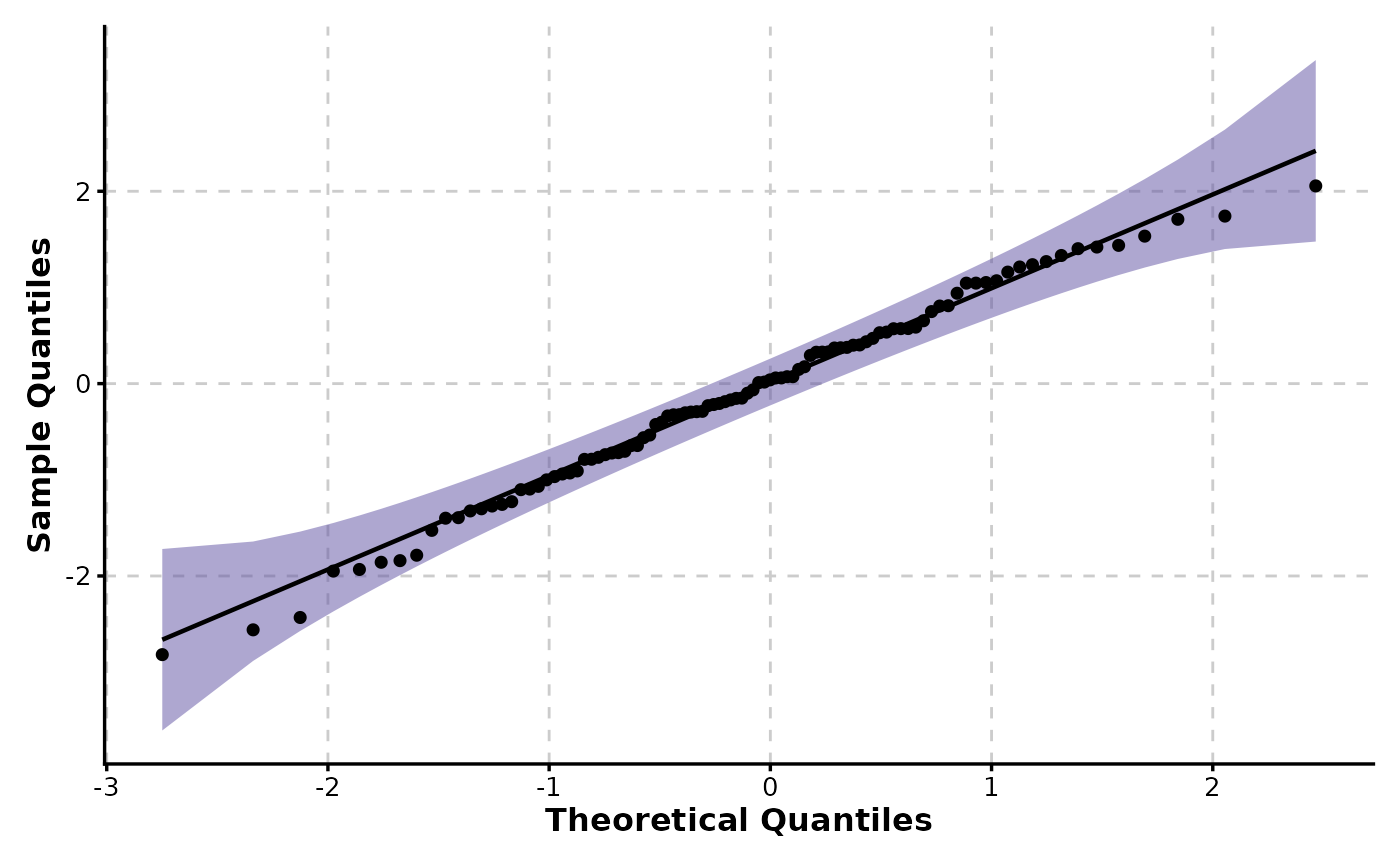
set.seed(8525)
data <- data.frame(norm = rnorm(100))
QQPlot(data, val = "norm", band = TRUE)
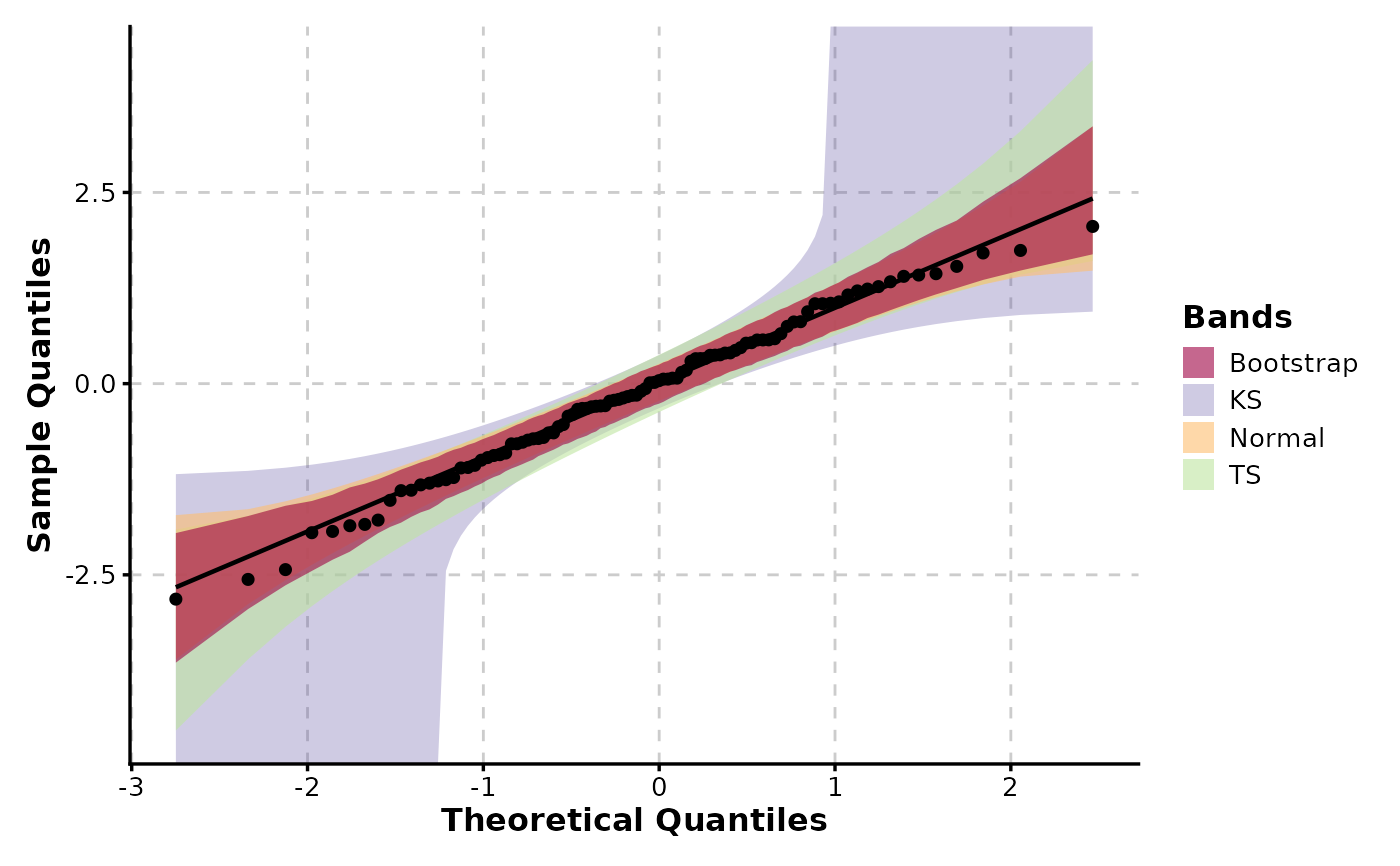
 QQPlot(data, val = "norm", band = list(
list(bandType = "ks", mapping = ggplot2::aes(fill = "KS"), alpha = 0.3),
list(bandType = "ts", mapping = ggplot2::aes(fill = "TS")),
list(bandType = "pointwise", mapping = ggplot2::aes(fill = "Normal")),
list(bandType = "boot", mapping = ggplot2::aes(fill = "Bootstrap"))
), band_alpha = 0.6)
QQPlot(data, val = "norm", band = list(
list(bandType = "ks", mapping = ggplot2::aes(fill = "KS"), alpha = 0.3),
list(bandType = "ts", mapping = ggplot2::aes(fill = "TS")),
list(bandType = "pointwise", mapping = ggplot2::aes(fill = "Normal")),
list(bandType = "boot", mapping = ggplot2::aes(fill = "Bootstrap"))
), band_alpha = 0.6)
 # \donttest{
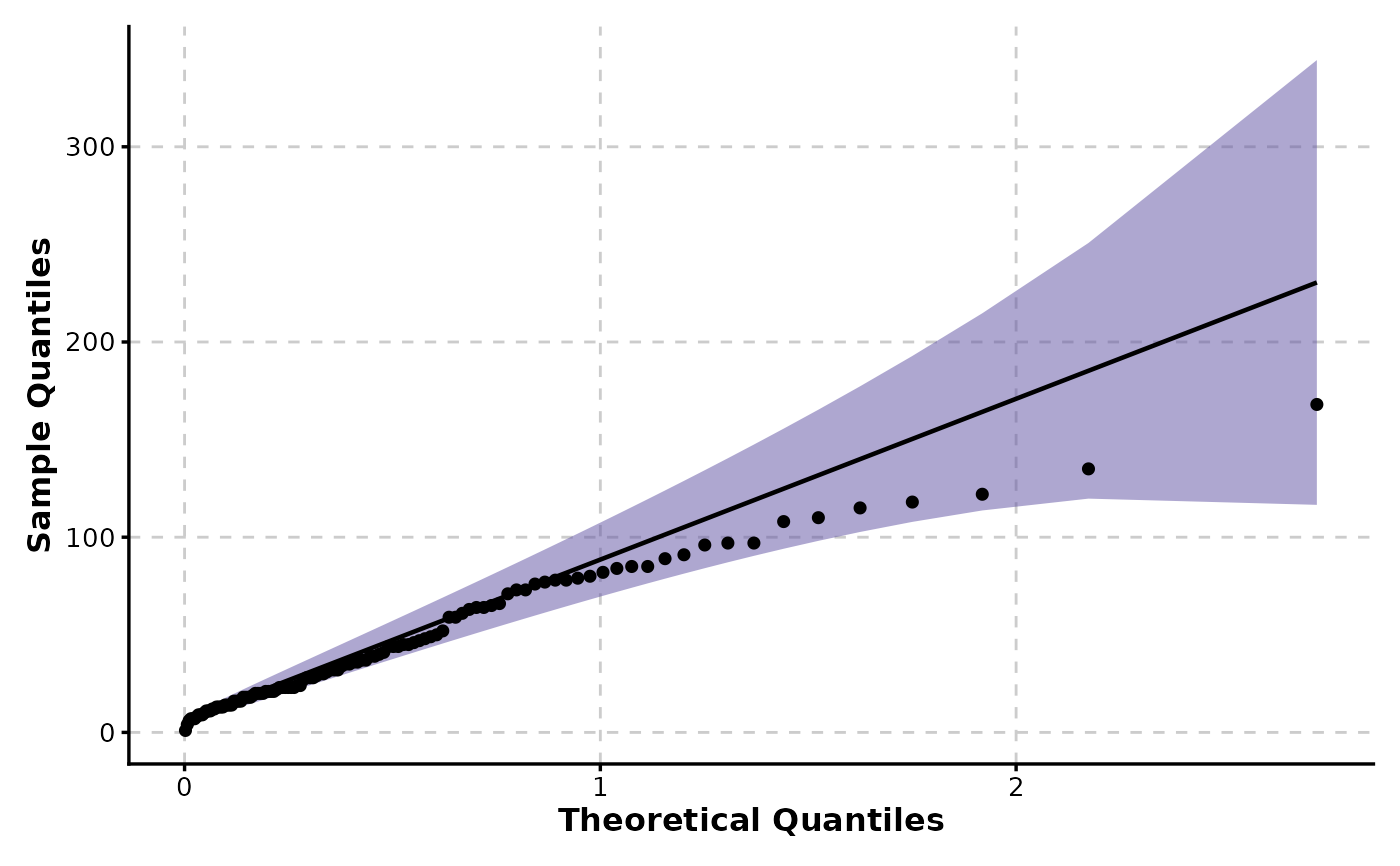
data(airquality, package = "datasets")
di <- "exp" # exponential distribution
dp <- list(rate = 2) # exponential rate parameter
QQPlot(airquality,
val = "Ozone",
band = list(distribution = di, dparams = dp),
line = list(distribution = di, dparams = dp),
point = list(distribution = di, dparams = dp)
)
# \donttest{
data(airquality, package = "datasets")
di <- "exp" # exponential distribution
dp <- list(rate = 2) # exponential rate parameter
QQPlot(airquality,
val = "Ozone",
band = list(distribution = di, dparams = dp),
line = list(distribution = di, dparams = dp),
point = list(distribution = di, dparams = dp)
)
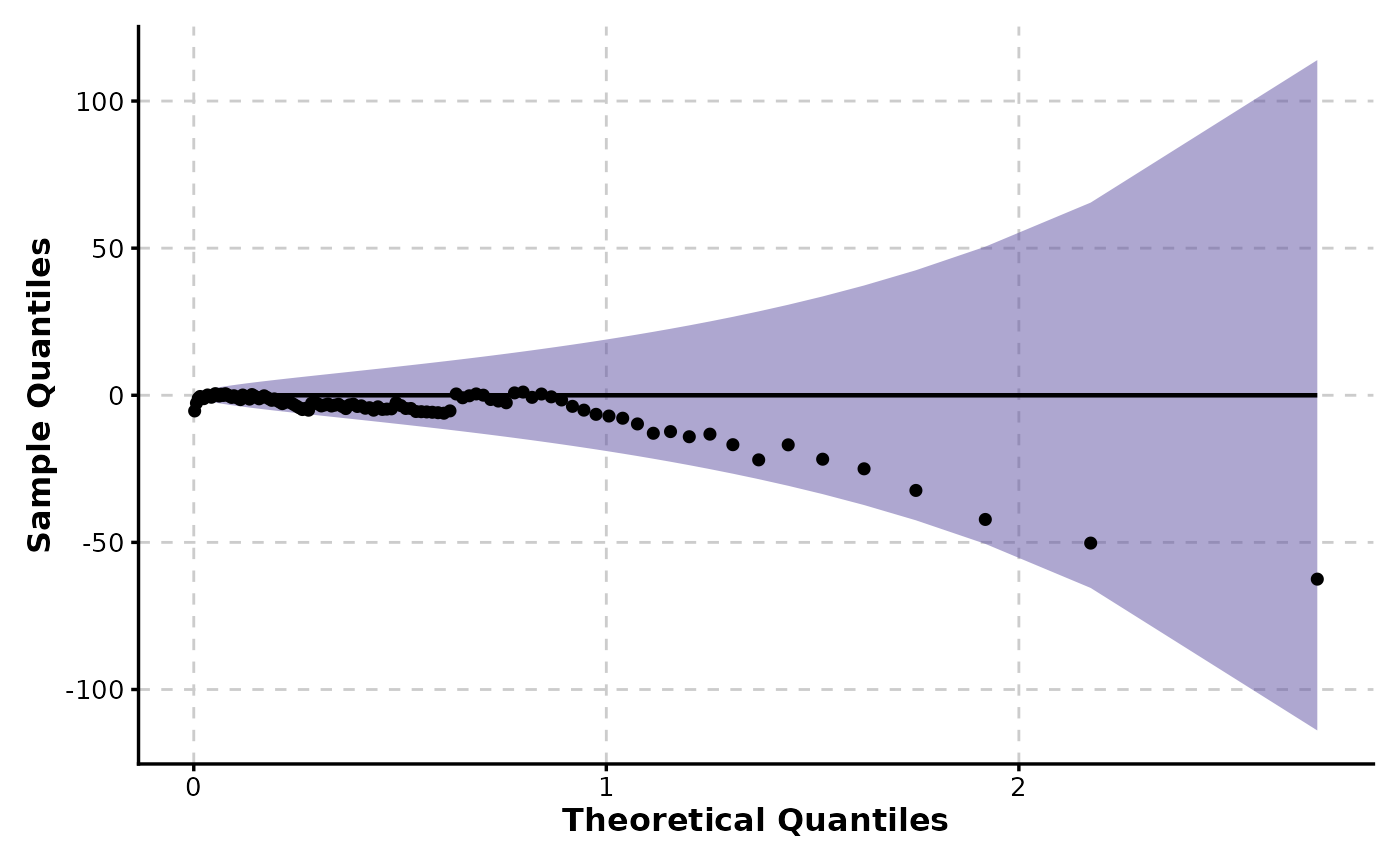
 de <- TRUE # enabling the detrend option
QQPlot(airquality,
val = "Ozone",
band = list(distribution = di, dparams = dp, detrend = de),
line = list(distribution = di, dparams = dp, detrend = de),
point = list(distribution = di, dparams = dp, detrend = de)
)
de <- TRUE # enabling the detrend option
QQPlot(airquality,
val = "Ozone",
band = list(distribution = di, dparams = dp, detrend = de),
line = list(distribution = di, dparams = dp, detrend = de),
point = list(distribution = di, dparams = dp, detrend = de)
)
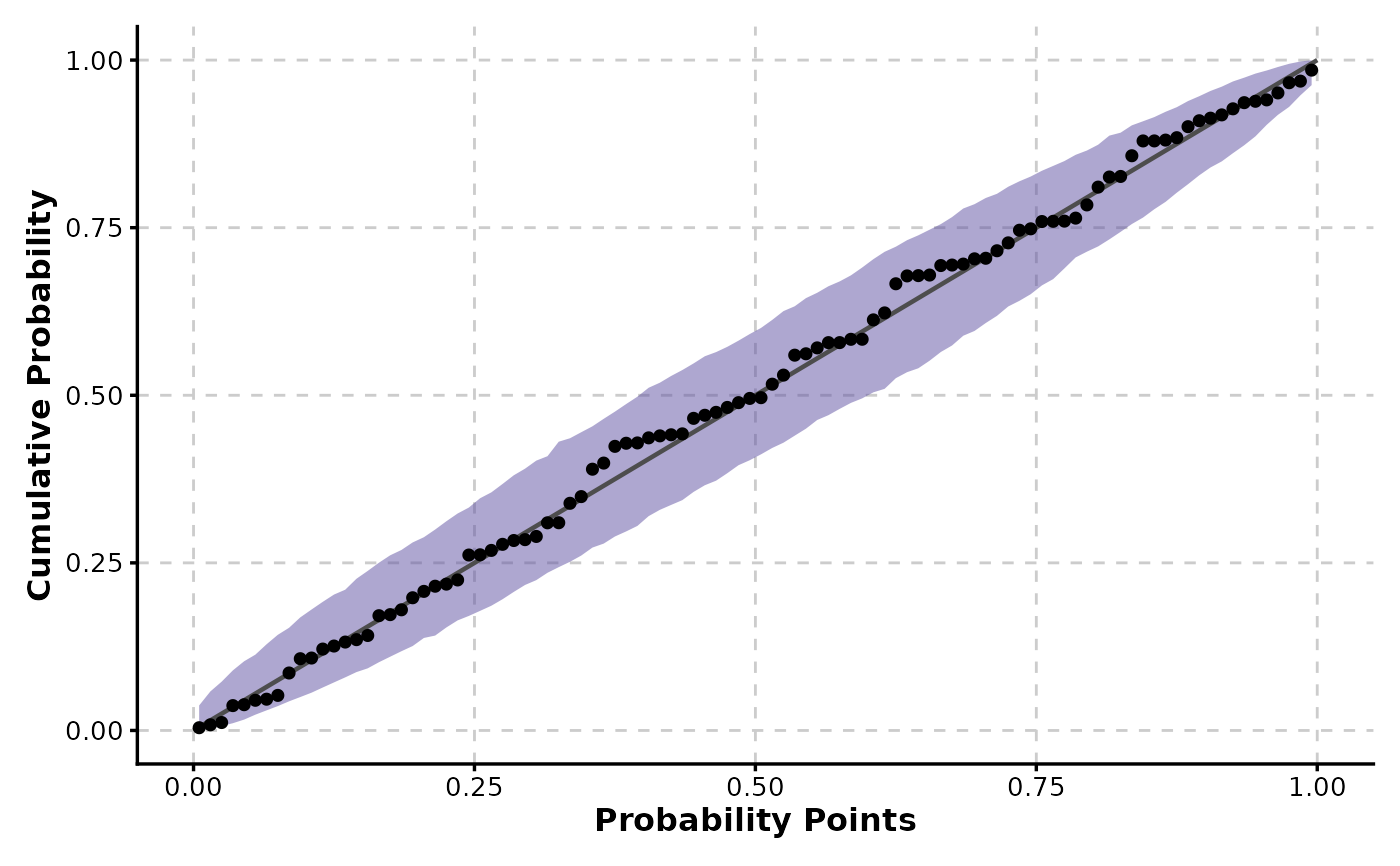
 QQPlot(data, val = "norm", type = "pp", band = TRUE)
 dp <- list(mean = 2, sd = 2) # shifted and rescaled Normal parameters
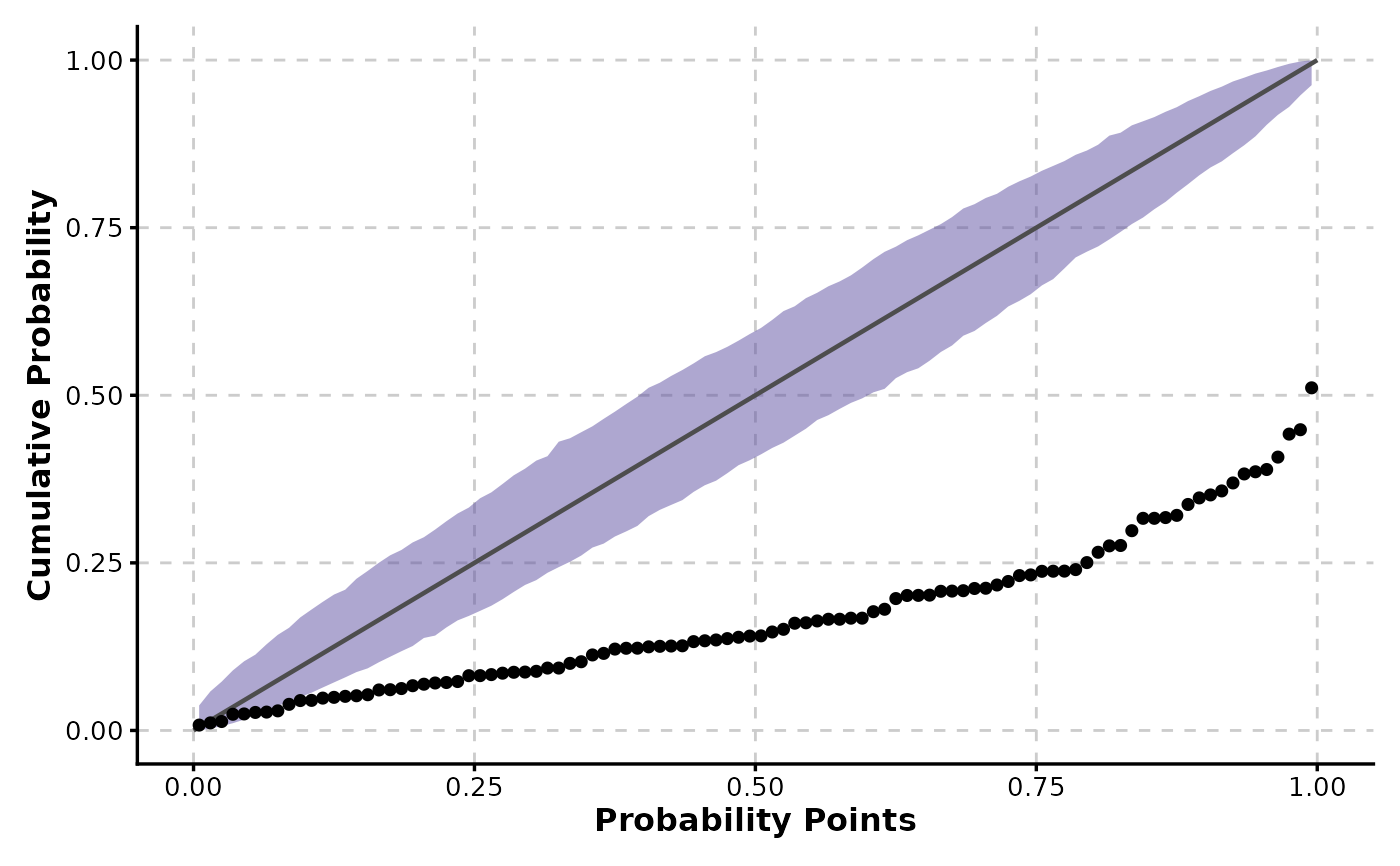
QQPlot(data,
val = "norm", type = "pp",
band = list(dparams = dp),
point = list(dparams = dp)
)
dp <- list(mean = 2, sd = 2) # shifted and rescaled Normal parameters
QQPlot(data,
val = "norm", type = "pp",
band = list(dparams = dp),
point = list(dparams = dp)
)
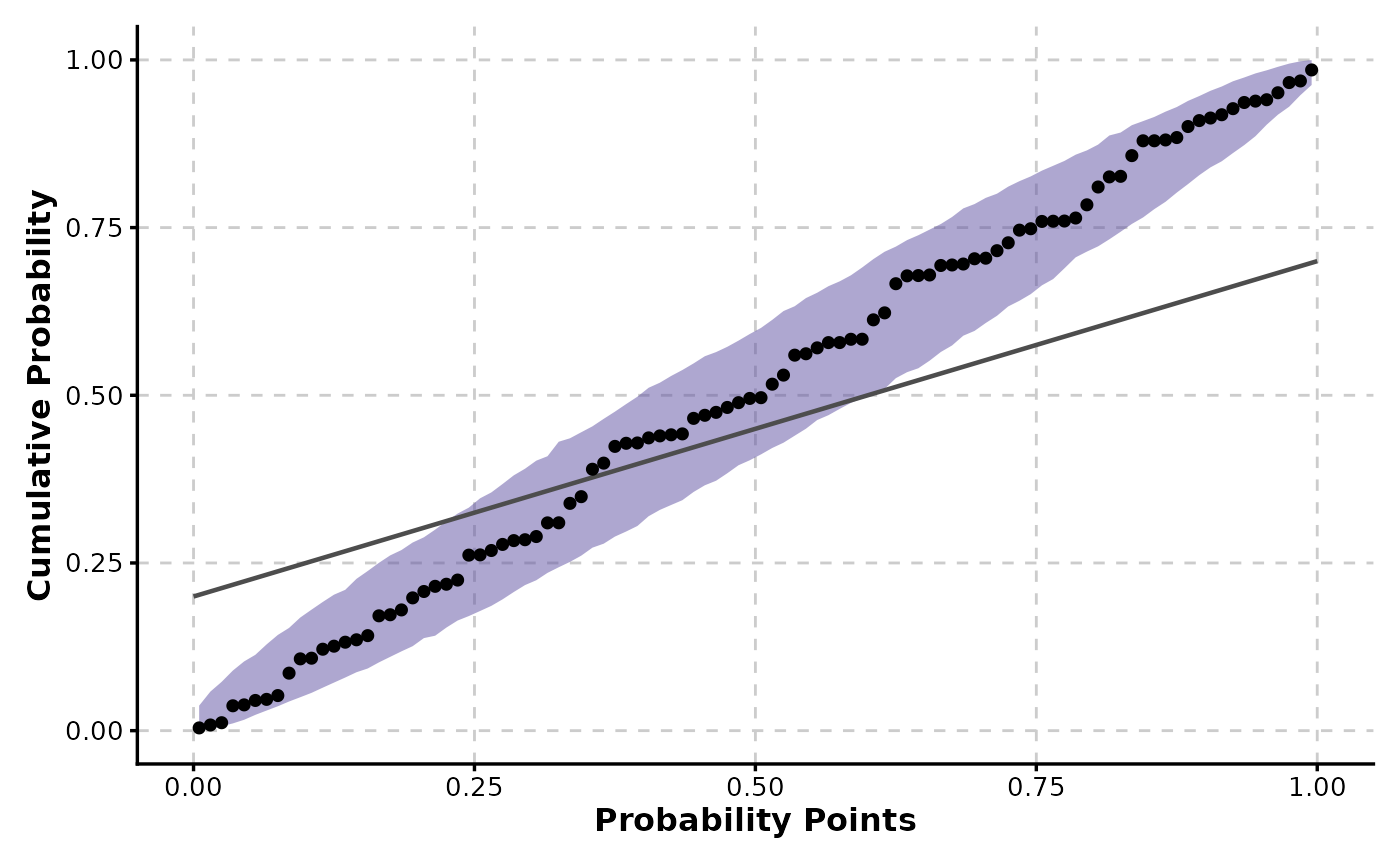
 QQPlot(data,
val = "norm", type = "pp", band = TRUE,
line = list(ab = c(.2, .5))
)
QQPlot(data,
val = "norm", type = "pp", band = TRUE,
line = list(ab = c(.2, .5))
)
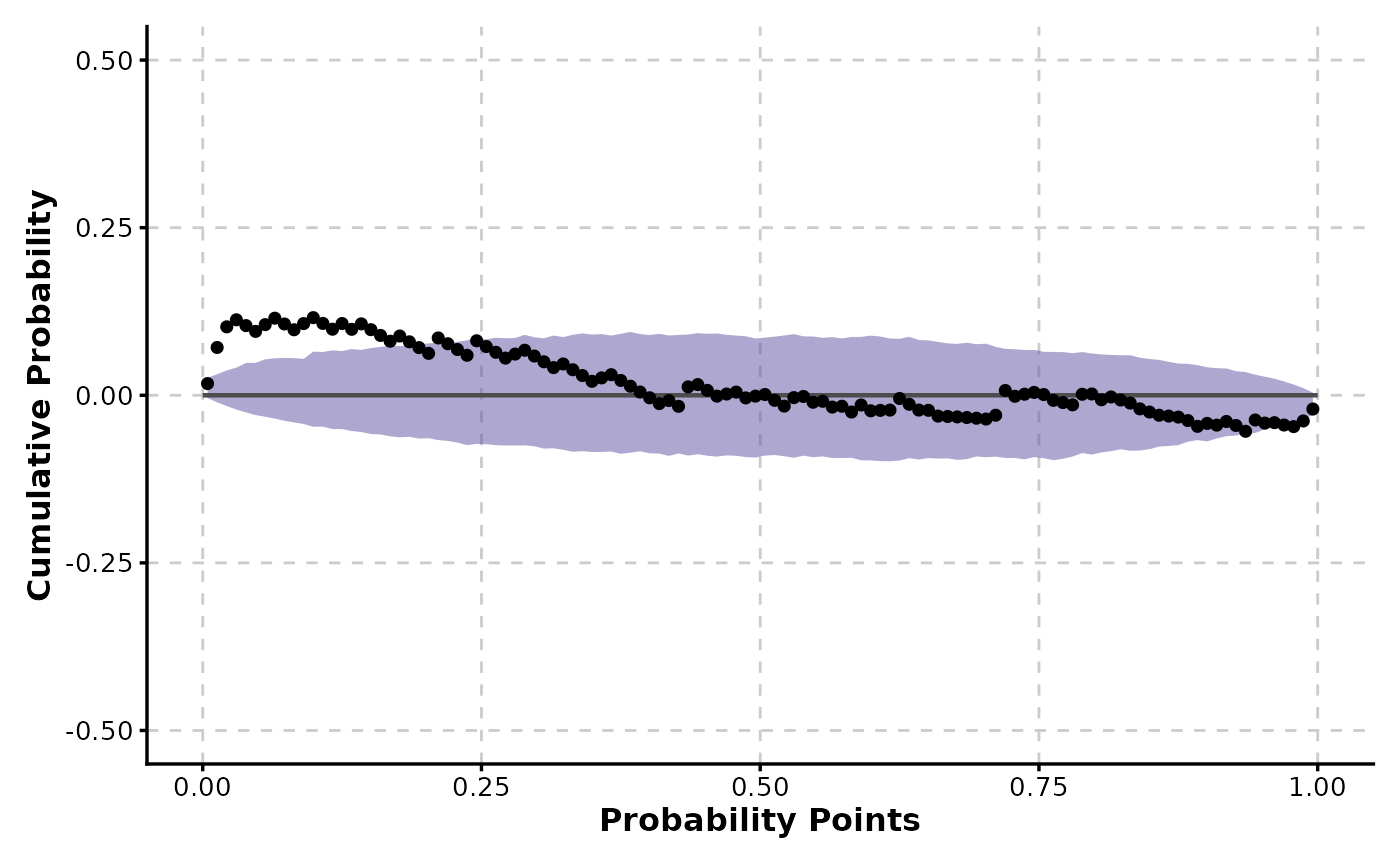
 di <- "exp"
dp <- list(rate = .022) # value is based on some empirical tests
de <- TRUE
QQPlot(airquality,
val = "Ozone", type = "pp",
band = list(distribution = di, detrend = de, dparams = dp),
line = list(detrend = de),
point = list(distribution = di, detrend = de, dparams = dp),
ylim = c(-.5, .5)
)
di <- "exp"
dp <- list(rate = .022) # value is based on some empirical tests
de <- TRUE
QQPlot(airquality,
val = "Ozone", type = "pp",
band = list(distribution = di, detrend = de, dparams = dp),
line = list(detrend = de),
point = list(distribution = di, detrend = de, dparams = dp),
ylim = c(-.5, .5)
)
 # }
# }